Nuance of Reflected Light on Fabric: Project 9 "How To See Color & Paint It"
Jun 22, 2026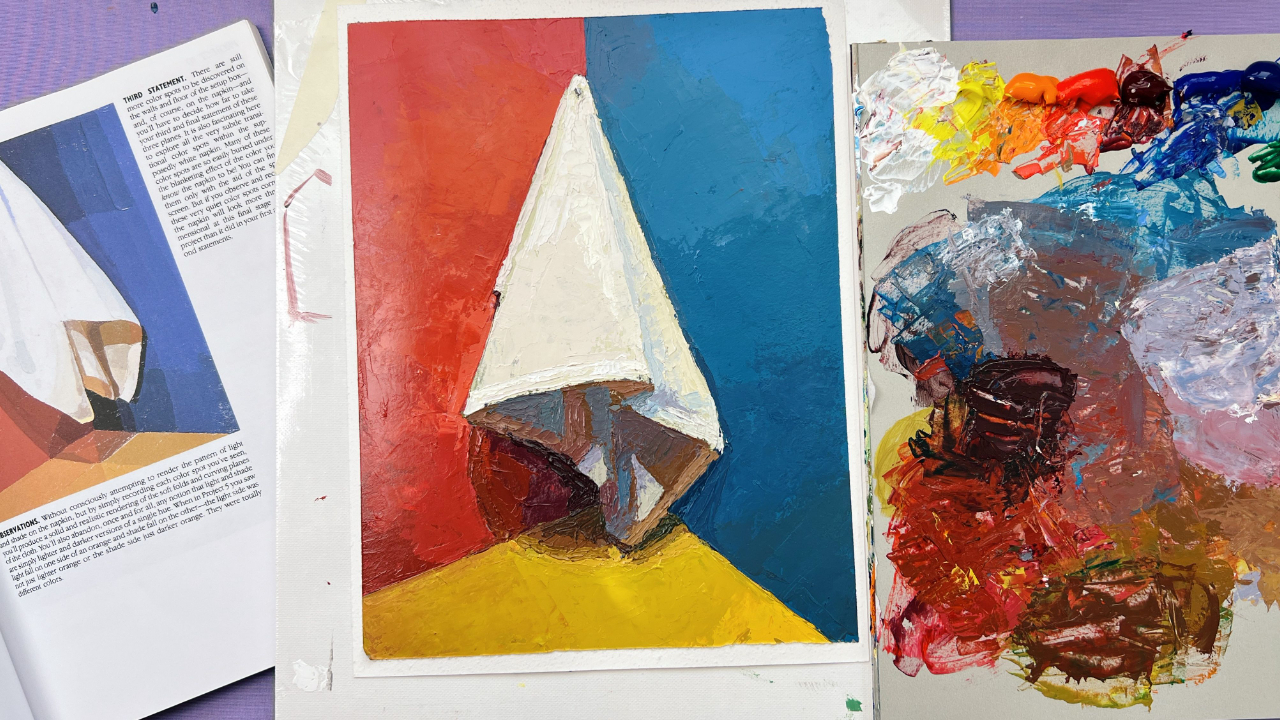
As we enter project 9 in Arthur Stern’s How To See Color & Paint It, my first instinct was to look at the book and ask myself if I was nearing the halfway point — and in fact, we are two projects away from it, out of a 22 project model. We are also graduating away from empty planes, blocks, and simple fruit. All this to say, it's finally starting to get good.
Project 9 Live Demo - Recording
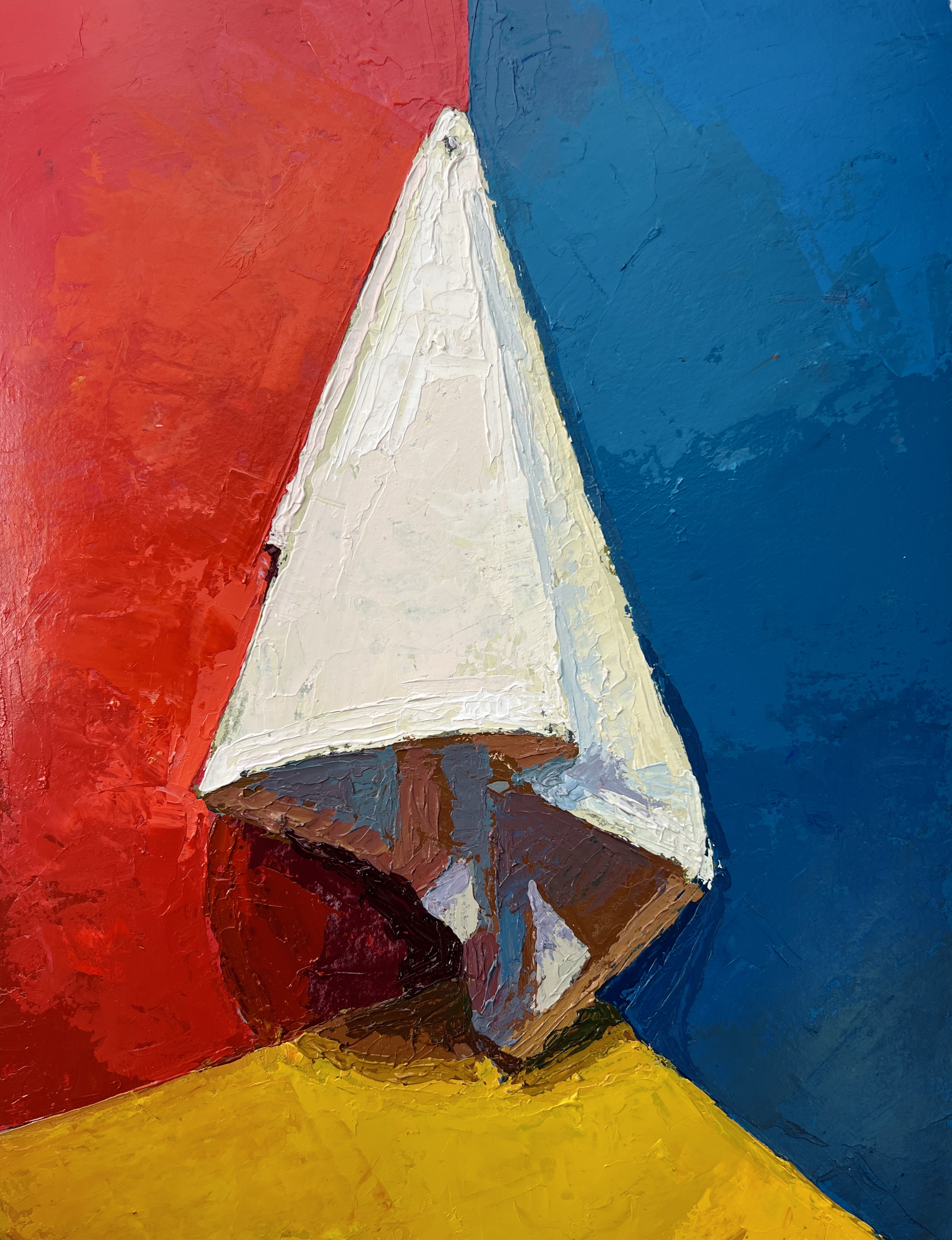 My demo from project 9 of 'How To See Color & Paint It'
As simple as painting a white napkin on three primary-colored planes might seem, understanding how to translate fabric is a great bit of encouragement for any representational painter's journey. We're using a more complex object — this is a not-so-distant relative of the first project, in which we painted a roll of toilet paper and discovered that a white object could in fact be multiple other colors. But the complexity of the planes, combined with the fact that the napkin sits on yellow, red, and blue surfaces with bouncing light, means we're really painting something far more chromatically complex than a white napkin might lead you to believe.
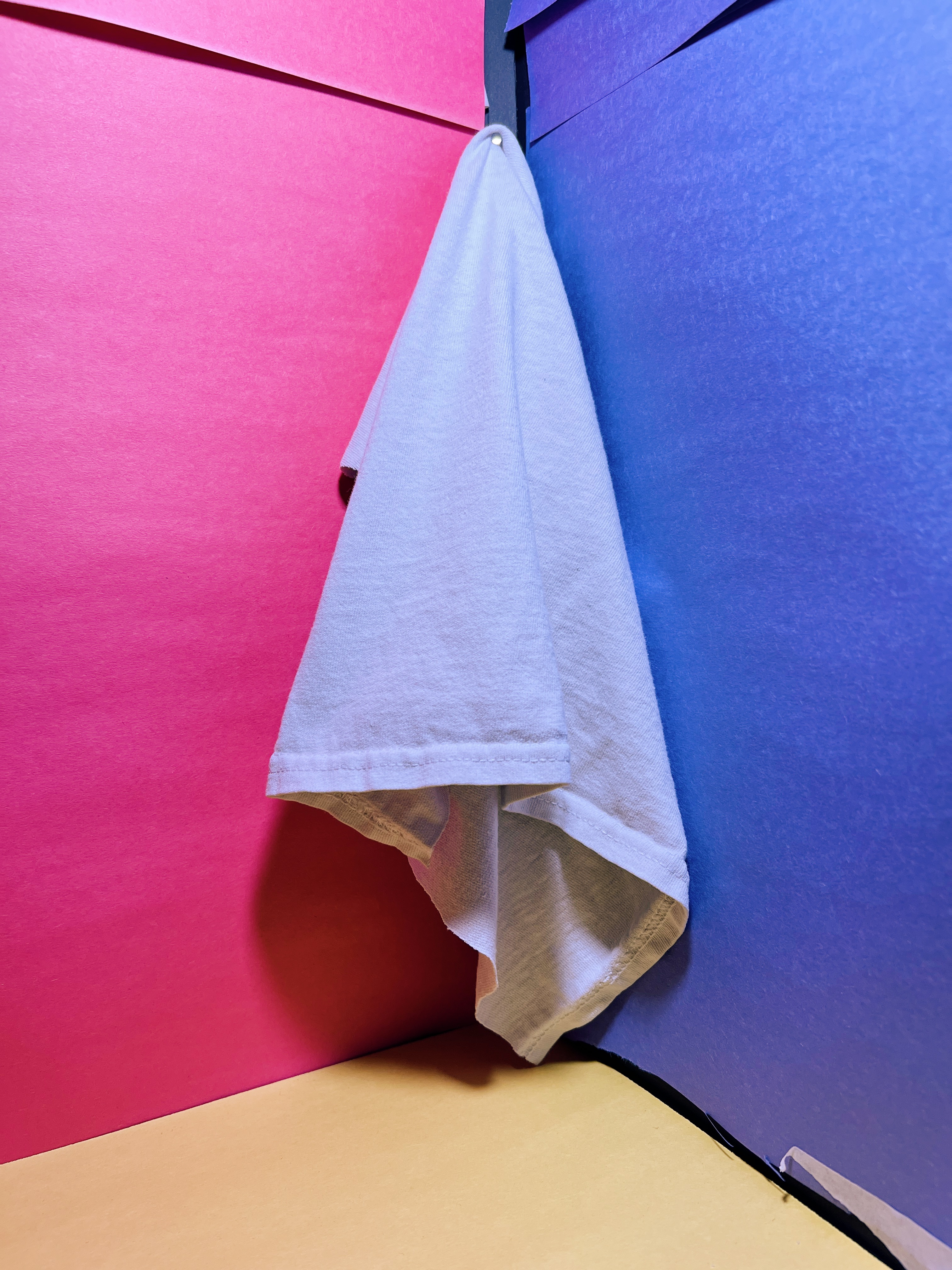 My reference image for project 9
The idea Stern wants you to analyze in this chapter is laying out which planes or color spots are in light and which are in shadow. Obviously there's going to be a cast shadow on the floor as well as the two walls, and there's also a lit part of our fabric and a shadow part. Stern is introducing — or perhaps expanding on — the idea that we treat objects in light and shadow completely differently, even if they are in fact the same color. This is an important dynamic to carry with you, and I would argue that this, in addition to understanding value and being able to check your value, is the secret to convincingly painting light. Whether you want to paint a nocturne, a sunny day, or even just a simple still life on the table, if you can remember these two things when it comes to light, the world is your oyster.
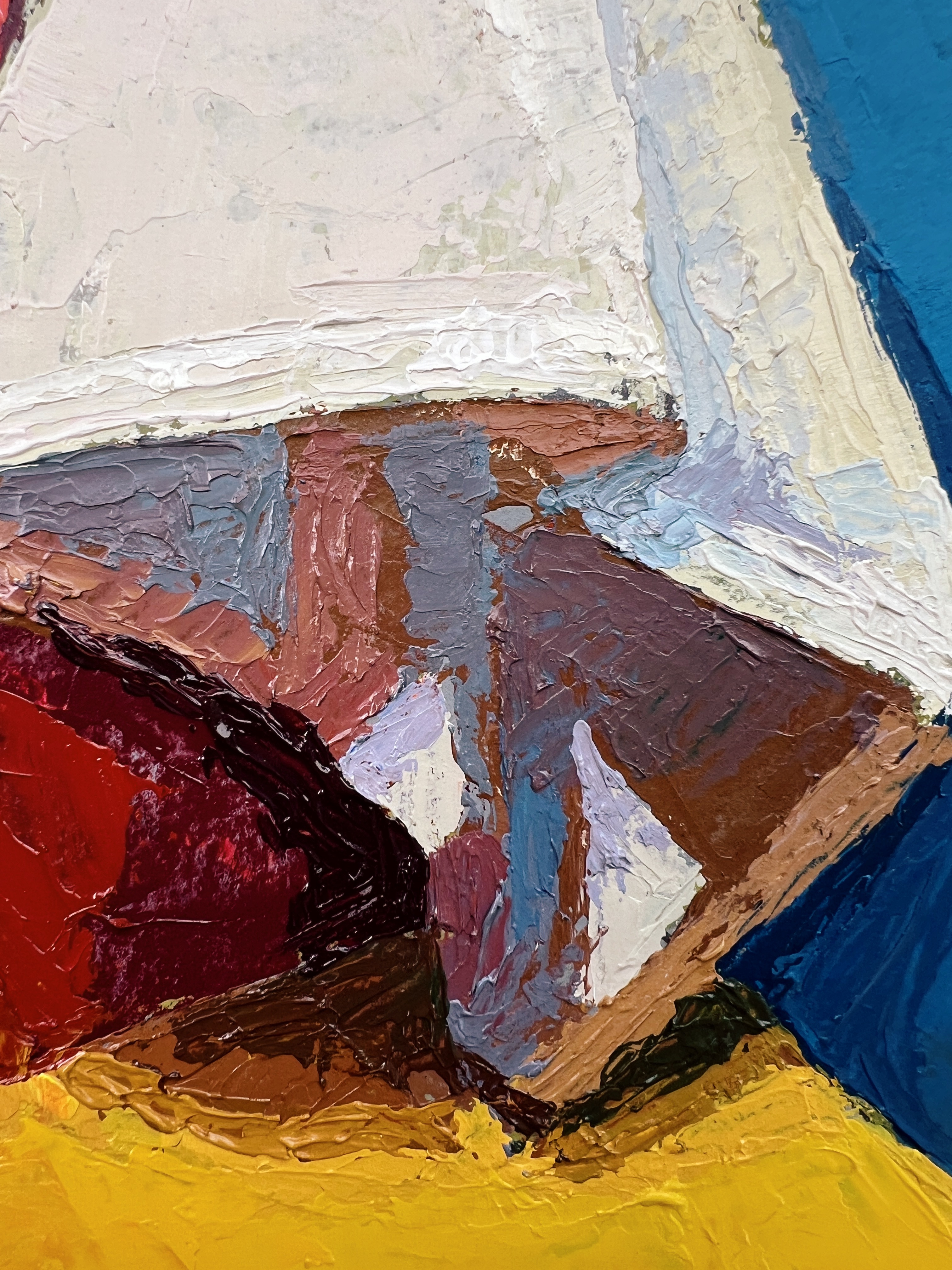 Detail from project 9 painting
Stern provides several wonderful illustrations in this chapter. The first statement looks a little like a distant relative of a Mondrian, with its primary colors and simple forms. We then graduate up to a tremendous amount of lifelikeness simply by paying attention to the contours in the napkin. And finally, what might seem comparatively easy, we find the final subtle color shifts in our third observation. Arthur Stern emphasizes that if you observe and record these quiet color spots correctly, the napkin will look more three-dimensional at this final stage than it did in your first statement. The idea being that you're not actually doing a lot in terms of putting down big, bold new colors in the napkin. The fine-tuning itself creates the realistic look we're aiming for.
I find that this chapter really cements the idea Stern states in his earlier chapters: well begun is half done. If you can nail the first stage, it makes the final stages easier. It seems simple enough — however, as someone who has taught a lot of in-person classes this year, especially with newer painters, I've seen so many students attempt something complicated like a piece of fabric using what I'll affectionately call the printer method: starting from one random point and working directionally.
Obviously some people can do this, and that's fine — but if you didn't want to improve, I'm not exactly sure why you're on this blog, lol. It's really hard to manage the whole this way, and because of how difficult it is for the human eye to analyze value unless you have an intensely refined aptitude for it, this is almost never a successful method. And personally, it's not a very fun method— as opposed to building more general and becoming more specific.
Next week, we'll look at painting multiple objects in relationship to each other — arguably the first of these projects that feels less like an arbitrary classroom assignment and more like a true painting.
I should also mention that Applied Color Theory has just released — my favorite course to date, and perhaps the most immediately useful one yet. It covers three sections: one focused on Josef Albers' teachings on color context, another on the power of limited palettes and color wheel analysis, and finally the relationship between color and light. These lessons will immediately improve your skill. If you've ever wanted to become a Lifetime Access student and you're on the fence, now is a great time to join.
Sunday June 28 at 10:00am CST, I’m hosting a FREE Applied Color Theory webinar where I’ll demo an exercise from the course live and answer your questions via a Q&A. Color is the aspect of painting and design that brings life to your work — knowing what factors influence your perception of color will immediately improve your paintings. Don’t miss out on this opportunity to make those improvements right away.
But hurry! Spots are limited for this free webinar and you won’t want to miss the special offer I’m providing the attendees.
WANT MORE PAINTING EXPERTISE?
Sign up for the Not Sorry Art School newsletter for exclusive offers, course updates, free perks and more!