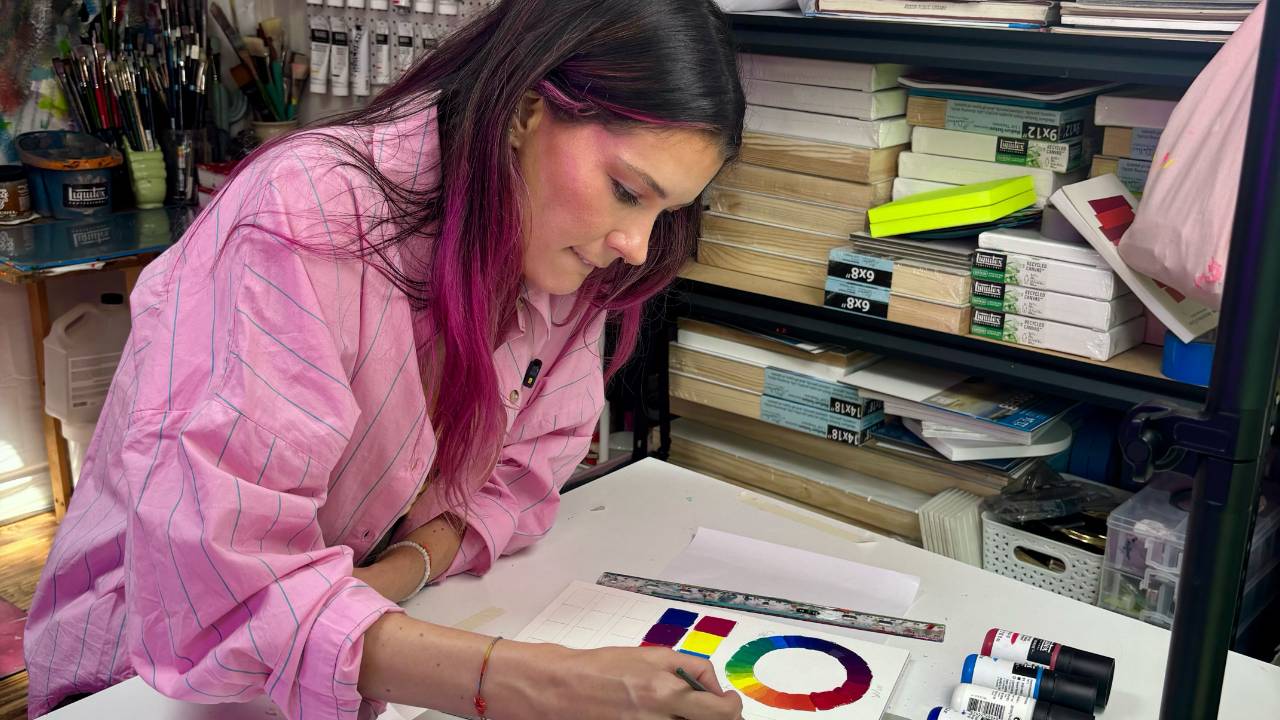
How Plain Is a Plane? Project 4 "How To See Color & Paint It"
Mar 30, 2026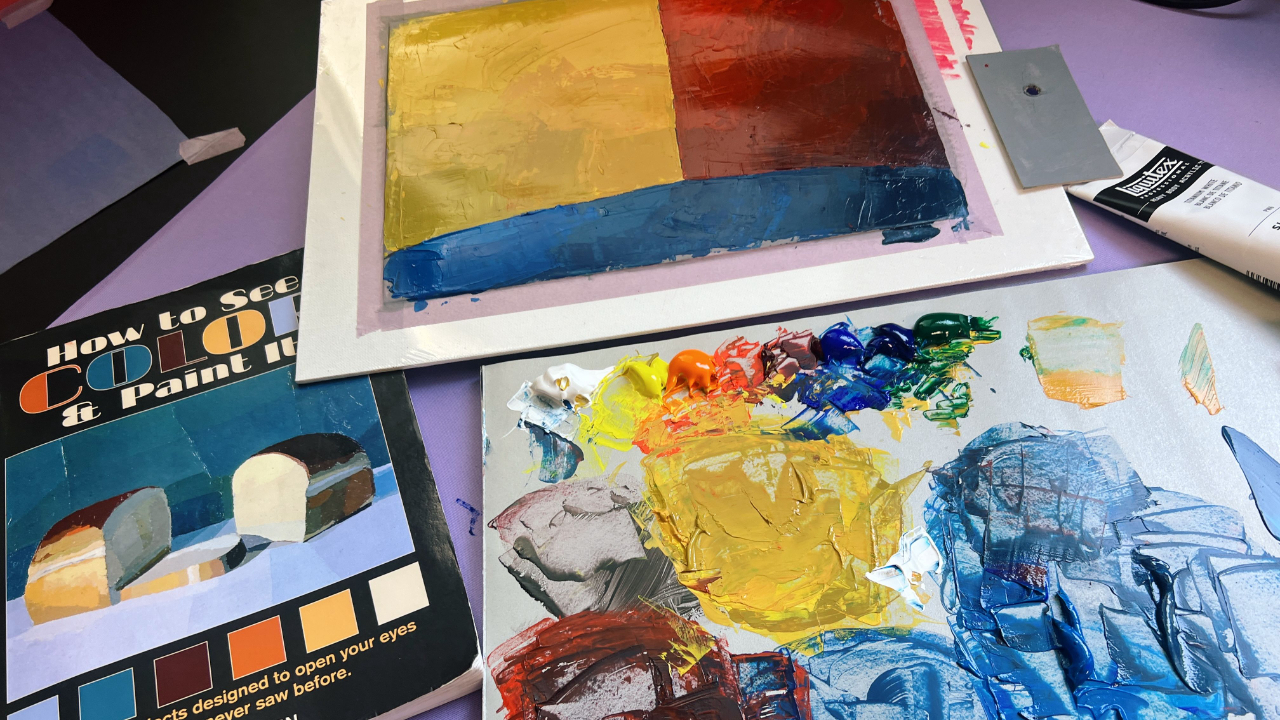
Call me a color nerd, but today’s project Arthur Stern's How To See Color & Paint It was by far my favorite thus far.
I remember doing exercises from Stern's book years ago, and project four always stood out. It centers on a deceptively simple question: How plain is a plane?
[YouTube video from this demo: Why Your Paintings Don't Look Realistic (Yet)]
In other words, what separates a painting that feels flat or cartoonish (which, to be clear, can absolutely be intentional and effective) from one that feels naturalistic and real? More often than not, it comes down to subtle, highly attuned shifts in value and chroma.
This isn’t the glamorous side of painting. Drawing tends to get the spotlight, and bold, saturated color moments often steal the show. But the real magic—the thing that quietly transforms your work—lies in your ability to perceive and translate nuance.
If you can train your eye to notice slight shifts in the surface of a leaf, the coat of a horse, or the gradual change along a horizon line, you unlock a tool that has the power to elevate your entire practice.
The Setup
The composition itself is intentionally simple: three pieces of construction paper taped into the corner of a box—blue as the ground, with yellow and red forming the side walls.
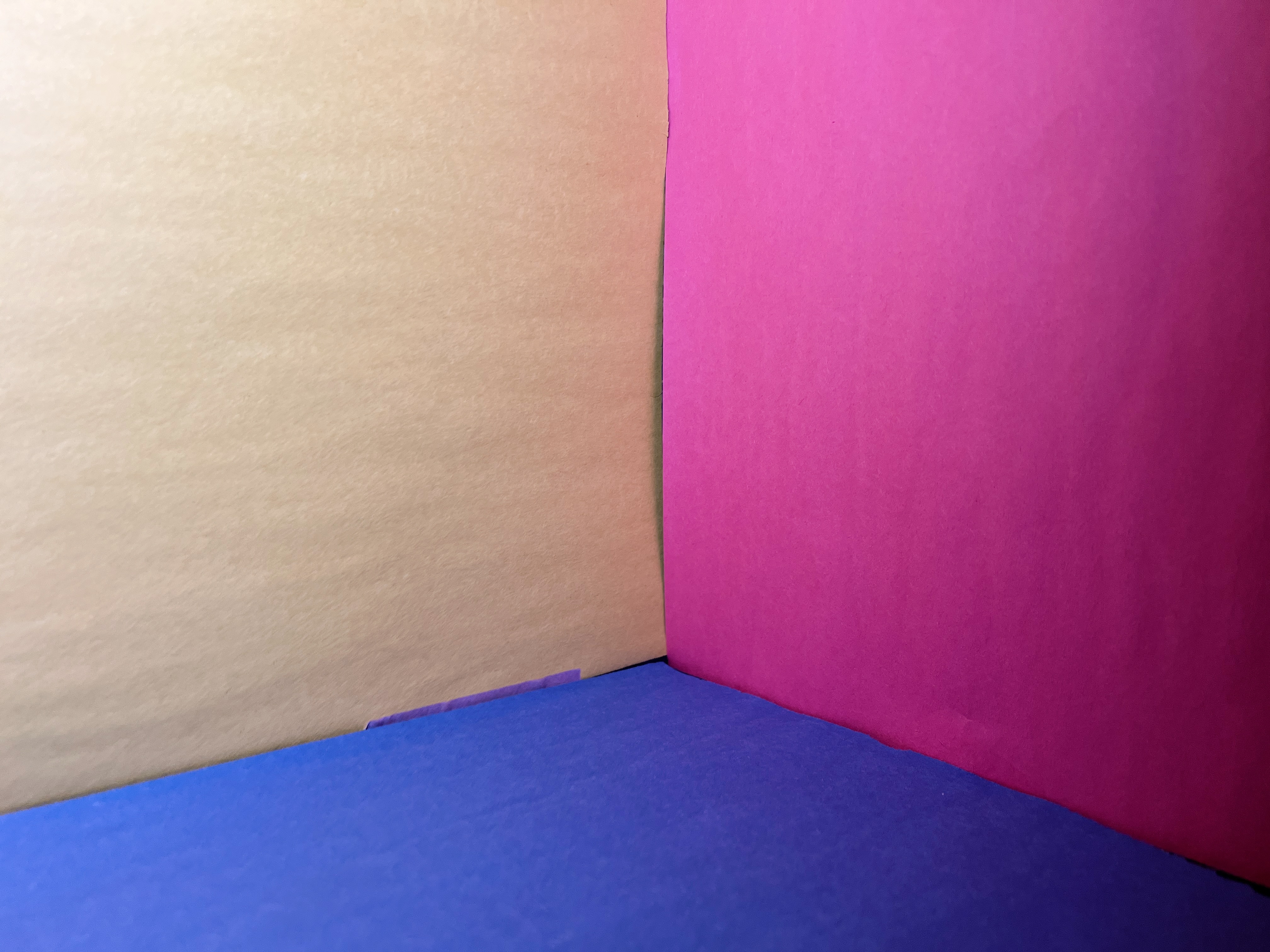 Reference photo
Using the framework Arthur Stern outlines in Chapter 2, we begin with three flat planes: one yellow, one red, one blue. But as we observe more closely, each plane begins to break down.
What initially reads as a single color becomes multiple “color spots.”
• The yellow plane in my study contains nine distinct variations
• The red plane has closer to ten or twelve
• The blue plane has around seven
Suddenly, the structure becomes more complex. A clear light source emerges. Bounce light appears. Subtle shifts in value and chroma begin to describe space.
What started as something graphic and simple evolves—with careful observation—into something that feels grounded in the real world.
Why This Matters
This exercise might not feel exciting at first glance. It’s essentially painted construction paper in a corner. But with the addition of palette knife marks and slight variations in color, even this simple setup begins to vibrate with life.
If you’re only planning to do a handful of projects from this book, make it this one.
Even if you don’t use this exact setup, try this: take a photo of a wall with light moving across it, and spend a few hours painting that surface. Yes, it sounds dangerously close to “watching paint dry,” but the payoff is enormous. If you’ve ever admired the cover of this book—the loaf of bread, the subtle gradations across the wall and table—then you’re already responding to the exact skill this exercise is designed to build.
Tools + Tips
One of the most useful tools for this exercise is a color isolator (or “color checker”). This can be as simple as a piece of cardboard with a small hole cut into it. I made mine with scissors and painted it a neutral gray.
When you isolate a color, you remove its surrounding context, making it much easier to identify subtle shifts. And as you’ve heard me say many times by now: color is contextual. Learning to see those shifts—especially on a surface that appears to be “one color”—is the entire point of this exercise.
Final Thoughts
I genuinely loved revisiting this project. It was a great reminder of how powerful these observational skills are, even (and especially) in their simplicity. Please share your studies with me and let me know how it goes. And if you have questions, don’t hesitate to reach out.
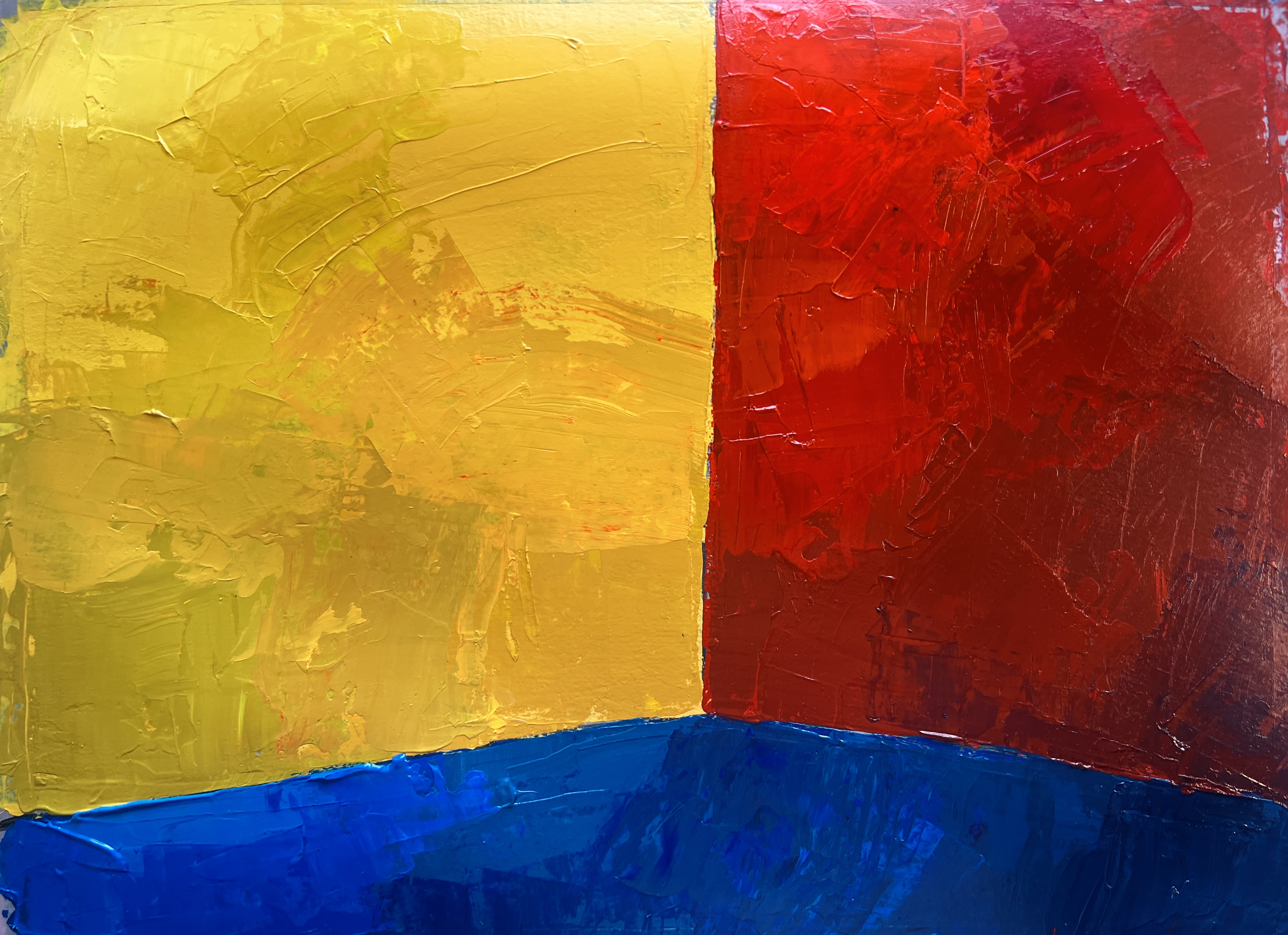 My finished piece
If you’d like to watch the full, real-time demo where I walk through each step clearly and succinctly, I highly recommend checking out the live recordings available to Not Art School Lifetime Access members.
WANT MORE PAINTING EXPERTISE?
Sign up for the Not Sorry Art School newsletter for exclusive offers, course updates, free perks and more!