Tips For Framing and Hanging Your Artwork
Nov 27, 2025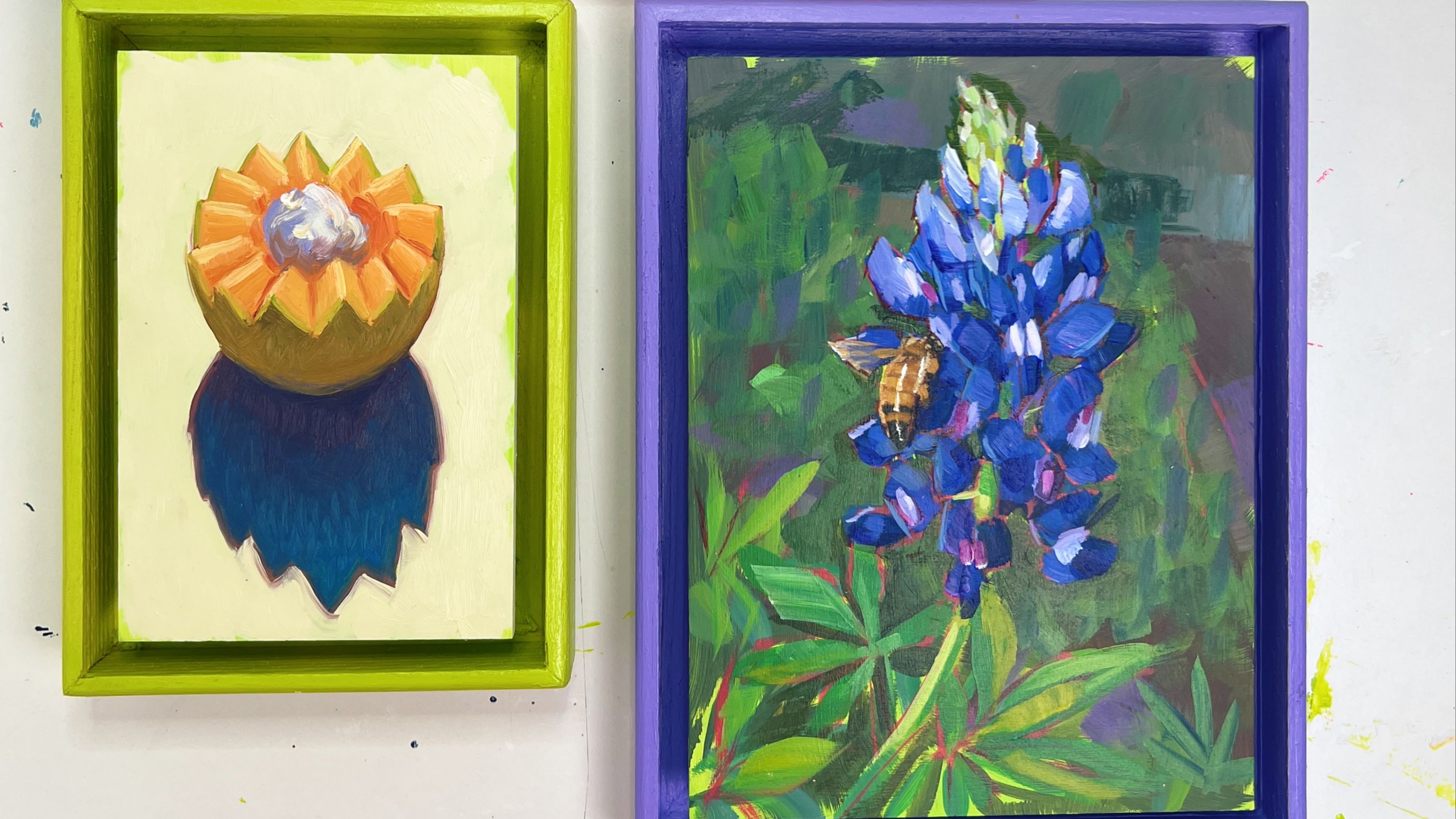
I want to walk you through how I finish my paintings and get them “gallery ready.” This is something that took me a while to learn, and honestly, I learned it by first doing it incorrectly. I want to begin with a little personal story.
My Early Feedback
Nearly a decade ago, during a very busy season where all I did was paint nonstop, I had this huge pile of craft-store, student-grade canvases stacking up in my studio. They were archival enough and totally fine to practice on, but it wasn’t until I had a conversation with a gallery owner that I realized these skinny canvases didn’t quite meet the standard.
The gallery owner was incredibly kind, but he sat me down and basically said:
- You need to use gallery-wrapped canvases because they’re thicker and more professional.
- You need to paint your edges a clean, solid color. He recommended black.
- You need D-rings, not sawtooths.
- You need to sign and date the back.
- You might even want to get a personalized stamp.
And you know what? I’m grateful for it. So much of the art world is stuff you’re just supposed to magically know. He explained my little faux pas without making me feel bad, and it made me want to pass those standards on to other artists so you don’t have to guess.
Before we get into the checklist, let me emphasize: there is no one right way to make art. People paint on cardboard. People paint on metal. People paint on pizza boxes. Anything is technically fine. What I’m giving you here is simply what helps your work fit in a gallery context and not stand out like a sore thumb in an unintended way.
The Basic Gallery-Ready Checklist
Use Gallery-Wrapped Canvases or Wood Panels
If you aren’t framing your piece, these look the most polished. Some artists paint their image around the edge; I never have, but it’s an option. You can also coordinate your edge color with your painting. Example: I have a big nocturne firefly painting where the edges are neon yellow-green. It glows like the fireflies and looks amazing.
Level 3 Gallery Wrapped Heavy Duty Canvas by Artist's Loft
Paint Your Edges
Pick a clean, intentional color. Black is a classic. If you want something custom, match it to the mood or palette of your piece.
Hardware: D-Rings & Bumpers
D-rings are the industry standard. Not sawtooths (save those for smaller works). Add bumpers to the bottom corners so the work hangs evenly and doesn’t scuff walls.
Sign and Date the Back
Simple, but important.
Protect Your Work
For storage and transport, I use:
Both prevent scuffs and impressions.
Floater Frame Standards (The Measurements You Actually Need)
When using a floater frame, the amount of space you leave between the painting and frame is up to you. My standard when making custom frames is an added inch height and width, so for example an 8x10” painting would be framed with a 9x11” frame. But you are welcome to play with the size of the frame based on your preference; some artists like to more room for their paintings to “float” and others like less for a tighter framing. It’s up to you.
Building a Floater Frame: Start With a Pre-Cut Kit
I recommend beginning with one of those self-contained floater-frame kits. That way you can see if you like the process before committing to buying wood, cutting miters, the whole deal. If it doesn’t feel daunting? Then absolutely level up and start making your own. It saves money long-term. And once you get the hang of it, it’s really satisfying.
My favorite pre-cut kit: Ampersand Floaterframes
Supply List (What You Need)
- Pre-cut floater frame kit or raw wood if you’re building from scratch
- Wood glue
- Miter box saw
- Hand Clamp
- Staple gun
- Sandpaper (multiple grits)
- Wood filler
- Paint or stain for finishing
- D-rings or eye screws and bumpers
- Hanging wire
- Measuring tape (or ruler)
- Safety gear (glasses, mask)
How to Build a Floater Frame (Step by Step)
1. Measure Your Artwork
Measure twice. For real. Measure twice, cut once. My recommendation is to cut your frame 1 inch longer on both sides (both height and width) than the dimensions of the painting. So an 8x10” painting would fit nicely in a 9x11” frame.
2. Cut Your Wood (If Not Using a Kit)
Cut 45° miter joints to form the four sides of your frame. Label them so you know which edges match.
3. Dry Fit Everything
Put the pieces together without glue first. Make sure nothing rocks, gaps, or twists. Use sandpaper to sand down uneven surfaces.
4. Glue, Clamp, and Square
Glue your corners. Clamp them. Make sure the frame is square before it dries. For added frame stability, you can staple the back of the frame where the sides meet. Just make sure the staples don't poke through the wood on the other side.
5. Sand, Fill, Sand Again
This is the step that feels endless when you’re new. But trust me: the visible polish comes from sanding and filling, over and over. Especially on the inside edges that peek out around your painting. It gets faster the more you do it. After a couple months of practice, I was cruising.
6. Finish (Paint or Stain)
Let it dry fully. Don’t rush this. A rushed finish always shows.
7. Attach D-Rings or Eye Screws and Bumpers
Always. Use sawtooth hanger en lieu of d-rings or eye screws for works 6x8" and smaller. Attach a wire for hanging for works with d-rings or eye screws.
8. Mount Your Artwork
Use the correct short screws through the back of the frame into the stretcher bars or panel. Make sure nothing pierces the front.
Final Thoughts
Framing is one of those skills that looks intimidating until you try it. Start simple. Try a kit. If you like it, level up to raw wood and custom sizes. It will save you money, give you control, and give your finished work a professional feel. And remember: none of this is about doing things “the right way.” It’s about making your work look intentional and cared for—because it deserves that.
WANT MORE PAINTING EXPERTISE?
Sign up for the Not Sorry Art School newsletter for exclusive offers, course updates, free perks and more!